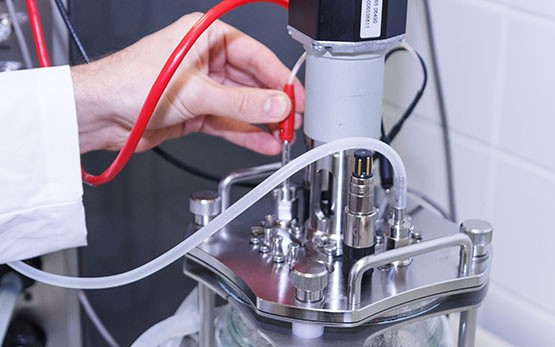
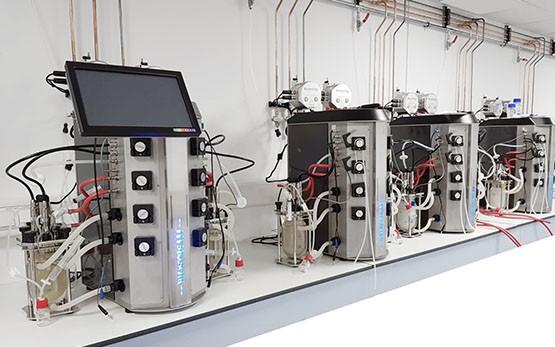
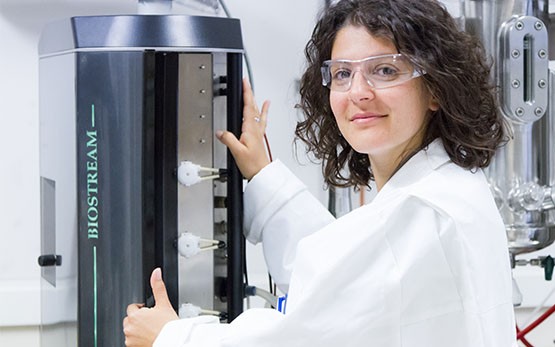
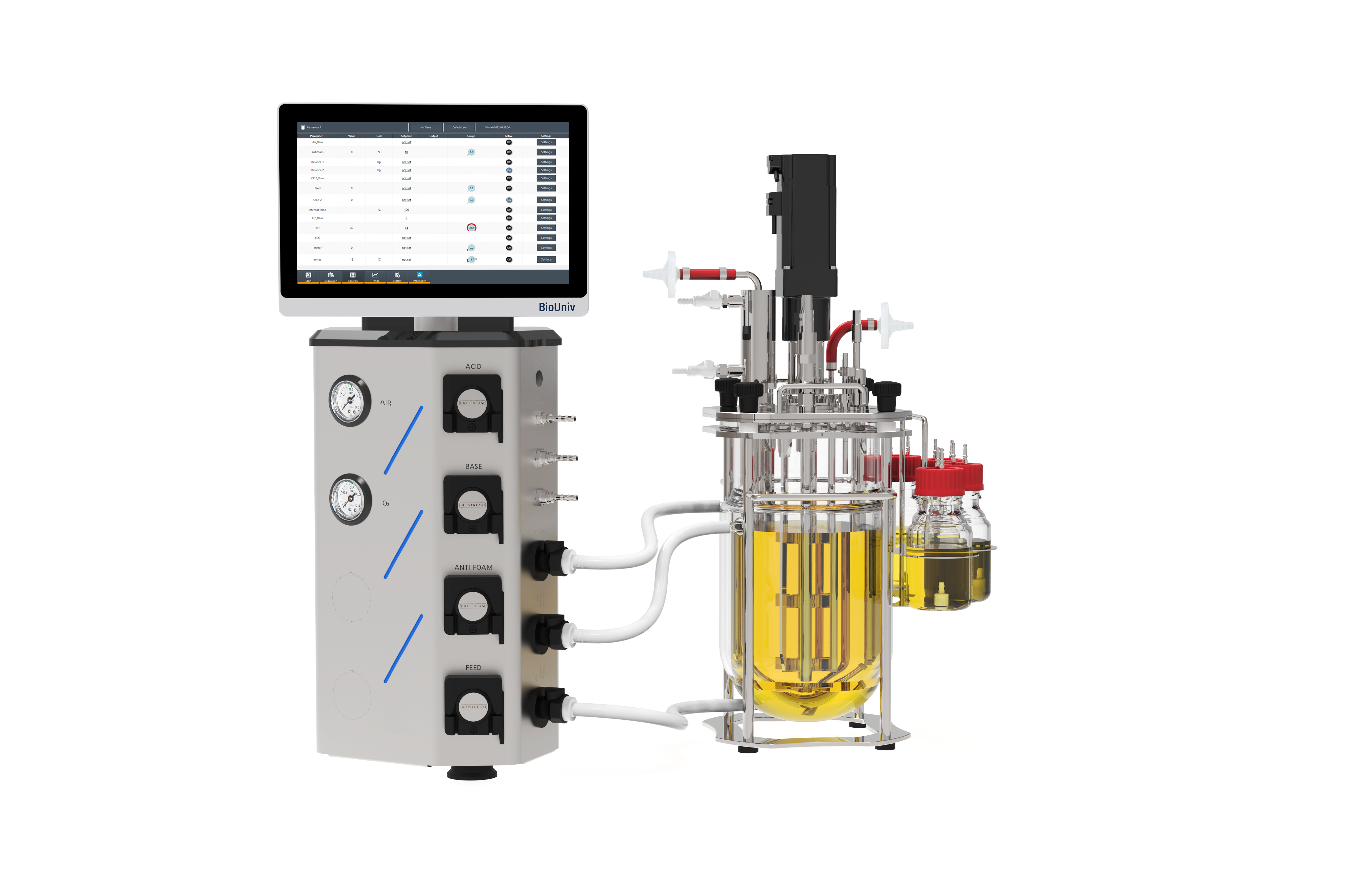
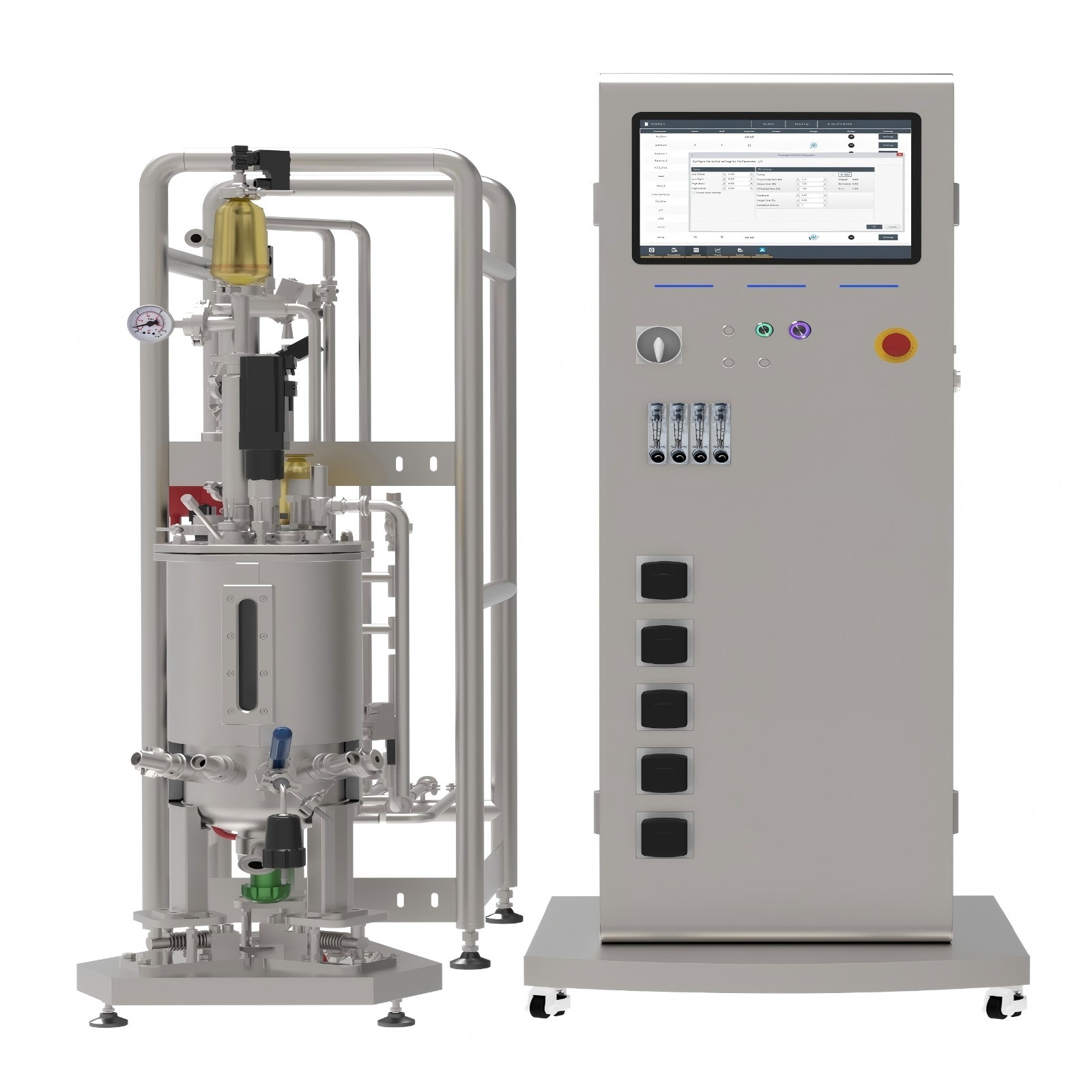
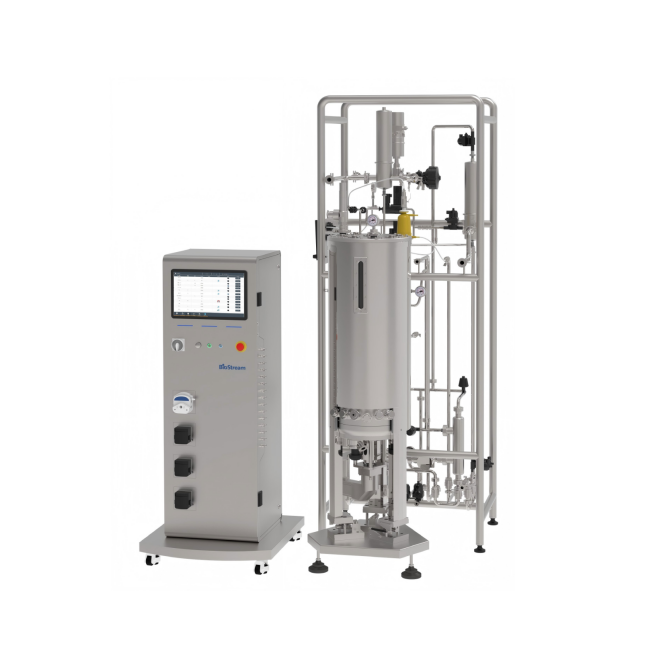
Description: High-cell-density bioprocesses make significant demands on a bioreactor. They require a powerful motor, a high leve...High-cell-density bioprocesses make significant demands on a bioreactor. They require a powerful motor, a high level of oxygenation, and a high-performance cooling system. To achieve high cell densities, a suitable feeding strategy is also essential. Additional scales and corresponding sensors ensure an easy and precise addition of nutrients.
High-cell-density cultures have an increased need for oxygen during the growth phase. The increasing need for oxygen can be met through the combination of stirring speed and gassing. To achieve the rpm needed for this, even in the case of high viscosity of the high-cell-density cultures, a powerful drive is required.
Regulating the substrate concentration plays a central role in high-cell-density processes. The pump for the addition of substrate can be controlled either directly on the bioreactor or using a specific bioprocess software. Being able to save and reuse individual feeding profiles is a significant advantage. Connecting a scale also allows gravimetric feeding for a precise addition of nutrients over long periods of time.
Using a bioprocess software, metabolic processes in cultures can be selectively analyzed and optimized. For example, the culture status can be tracked in real time via online sensors for the exhaust gas and biomass analysis (O2, CO2, turbidity). In addition, exponential feeding can be performed using the respiratory quotient (RQ).


Copyright © 2026 Biostream All rights reserved.