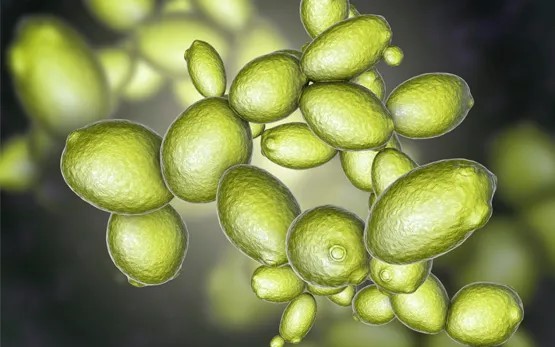
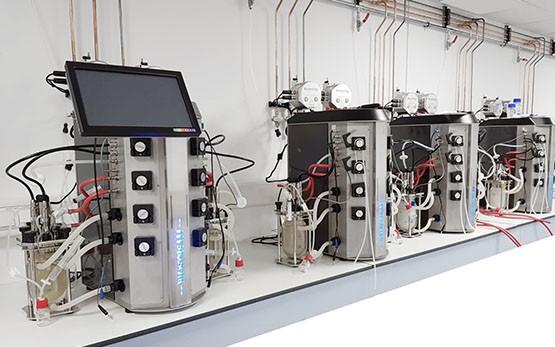
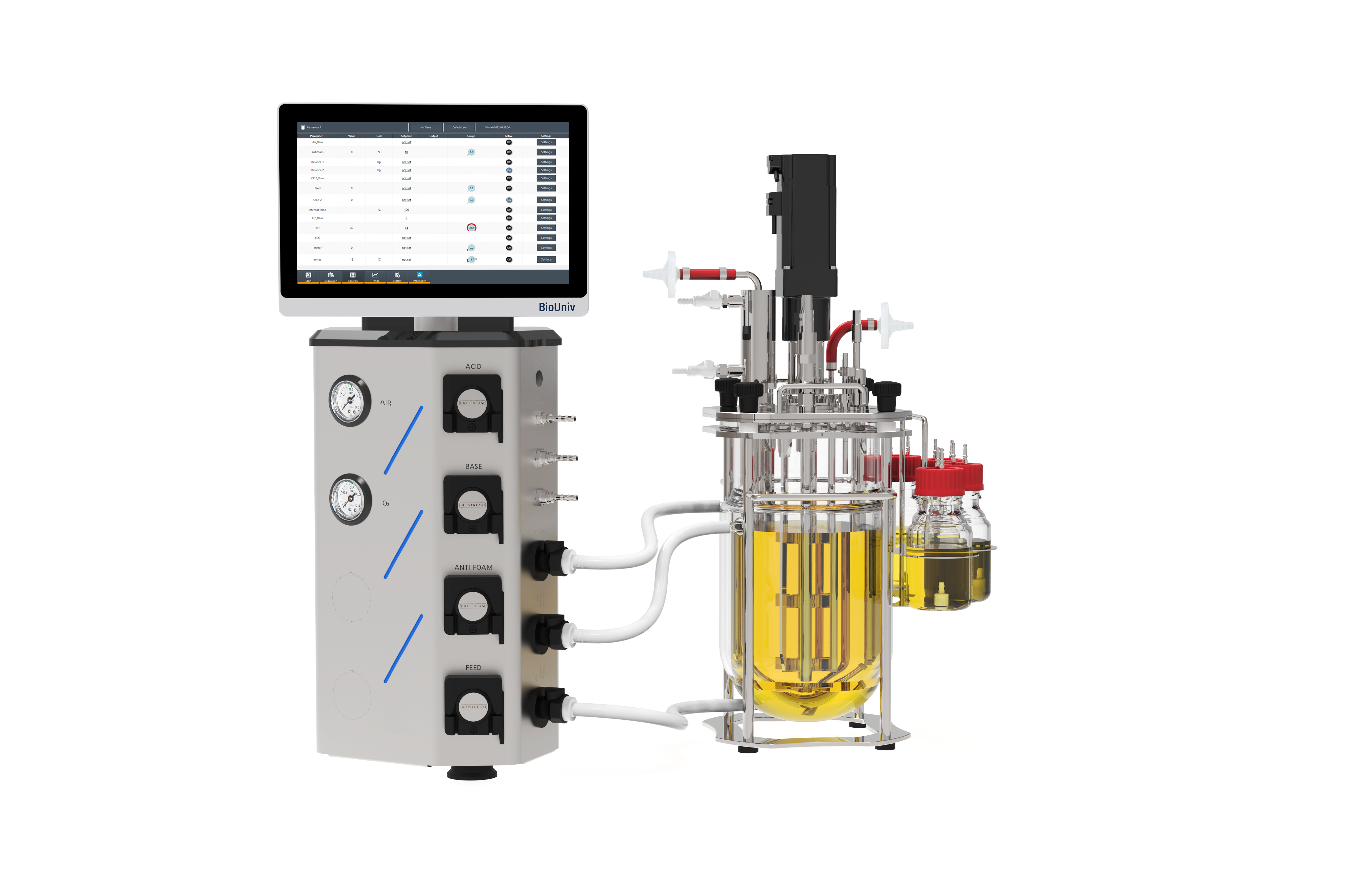
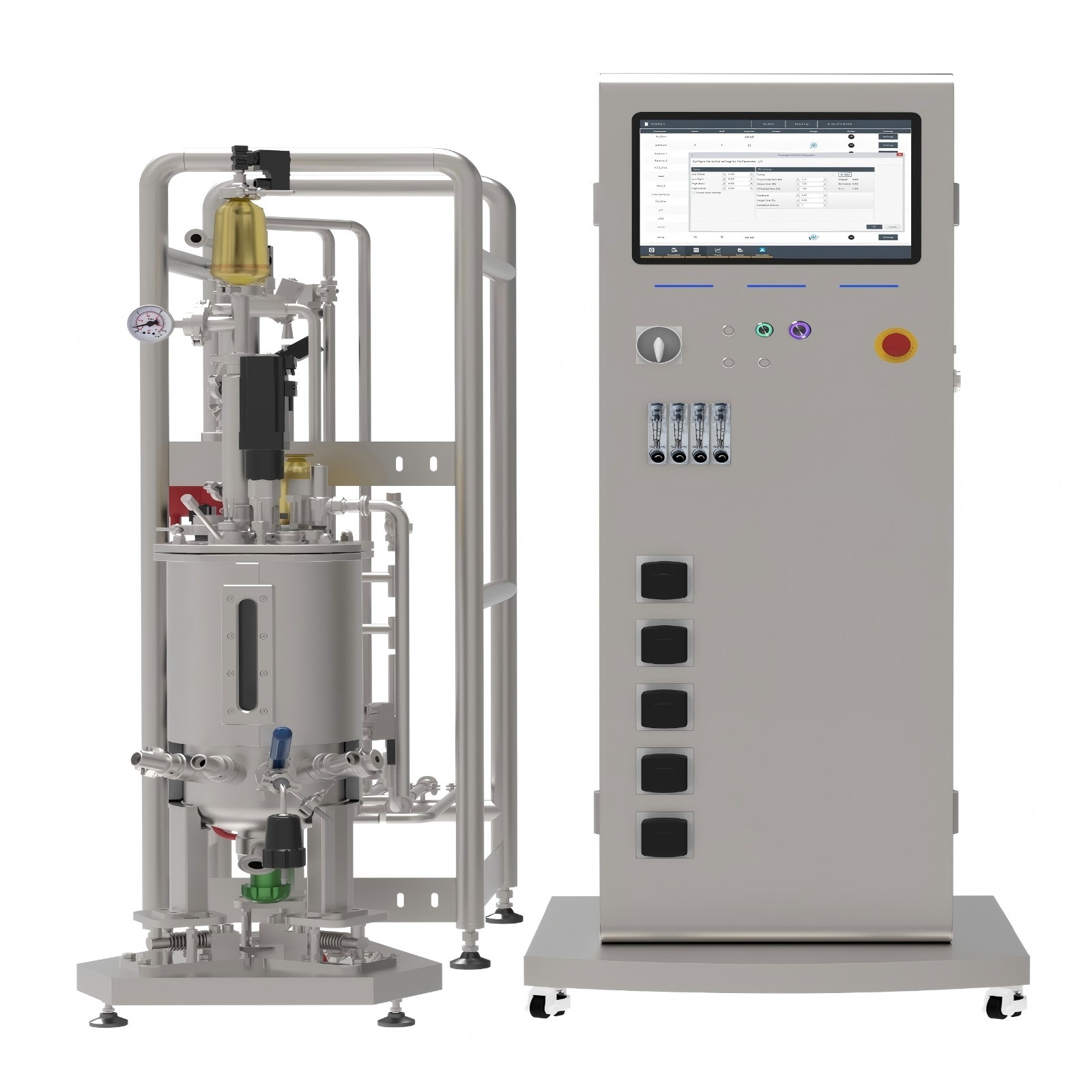
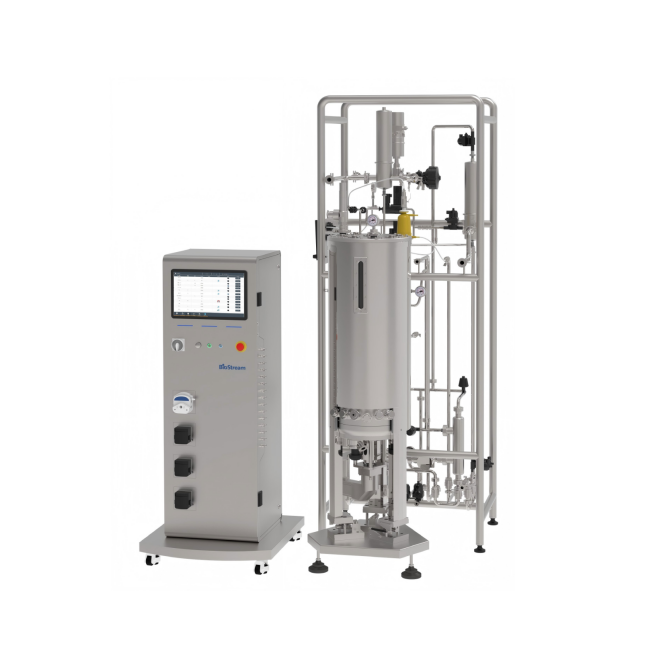
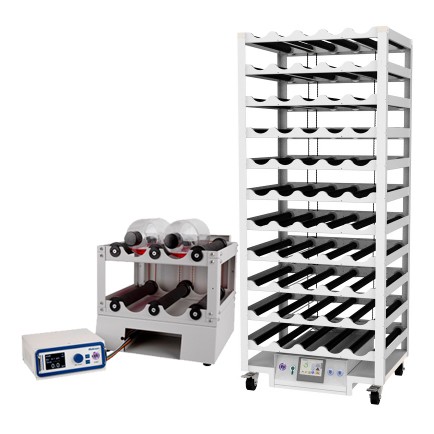
Description: Production of ethanol from lignocellulosic starting material (such as wood) is a two-phase process: enzymatic hydro...Production of ethanol from lignocellulosic starting material (such as wood) is a two-phase process: enzymatic hydrolysis to release the sugar, followed by fermentation itself. A sensible option for saving time and avoiding the need to purchase two pieces of equipment is to combine both process steps into a single system known as SSF (simultaneous saccharification and fermentation).
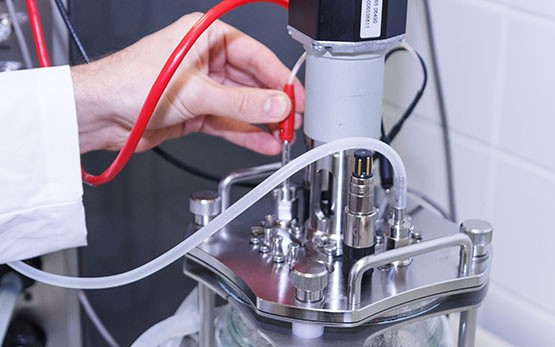
A bioreactor for SSF has to have a powerful drive, as this is the only way of thoroughly mixing not only highly viscous substrates containing large amounts of dry material, but also the liquefied form that arises following hydrolysis. And because the mixing properties of solids can vary substantially, customers also have a variety of stirrers to choose from.
Heat transfer in substrates that contain solids is lower than that in liquids. A two-fold, precise temperature-control process — one acting both within the substrate as well as within the double mantle surrounding the bioreactor — ensures optimum temperature management throughout the entire bioprocess. This prevents the interior wall of the reactor from overheating, leaving the enzymes undamaged..
Adding solids to bioreactors designed for liquids can sometimes be difficult. This is why SSF bioreactors have an unusually large port that allows users to dispense solids into the culture vessel easily.
The bioreactor records the motor torque in real time, allowing researchers to draw conclusions about the viscosity of the culture medium and thus about the progress of hydrolysis. Whereas the viscosity of the solids-containing substrate is initially high, enzymatic hydrolysis will cause it to drop continuously until the medium is a liquid. One way that researchers can use this information is for determining the ideal time to introduce the yeast and begin fermentation.


Copyright © 2026 Biostream All rights reserved.